FAQs: How we support your logistics operations

Tracking your assets is vital to creating a supply chain that works for you, your team, and your external stakeholders.


Sensize helps customers across the globe track their logistics operations to gain valuable, actionable insights that support their operations. Take a look at the most frequently asked questions we hear from customers and prospects alike below:


What devices does Sensize use for tracking reusable packaging?

Sensize offers three main devices that can be used in various combinations: a GPS tracker, a dot and an Access Point. These are designed for various use cases such as...

  • GPS
  • Dot
  • Access Point


How will I be able to access my tracking data?

Alongside our tracking technology, you gain access to the Sensize Platform, our tailored visual reporting system, which gives you all the information you need in an easy-to-understand, digestible format.


We also provide raw data access via the Sensize datafeed which you can integrate into your analytics system. By using this you can perform specialised data analysis for specific use cases. 


What is the Sensize Platform used for?

Sensize offers a platform for reusable asset tracking and monitoring, primarily focused on assets like pallets, crates, containers, roll cages, and many others. It integrates various technologies like GPS and BLE to provide real-time insights into asset locations, movements, and conditions.


The data that you will have access to also includes information on your inventory stock levels, cycle times, temperature readings, and leakage points. 


Can the Sensize Platform integrate with partners' systems?

Yes, with Sensize, you can choose whether you would like to use our own Platform, or integrate your data in your own portal via the API – or you can do both!


Sensize’s API allows for easy implementation across your organisation.


Does Sensize provide training around how to use the system and how to best put data to use?

Sensize offers comprehensive training for our platform to all users. This training is designed to help you and your team familiarize yourselves with the platform’s features.


That includes asset management, geolocations, alerts and reporting features.


This helps you make sure your business can fully leverage the portal’s capabilities to optimize your asset tracking and management processes effectively.


How do I know when an asset was lost?

When an asset ends up where it shouldn’t, Sensize’s tracking gives you a full overview of where each asset is at all times.


That means you can see exactly where the asset is and track its movement history, so you can see when it left its planned route and where it has ended up which will usually tell you whether there’s been a theft or a loss.


How do I know you can provide me the information I need?

We know that when it comes to managing your logistics operations, there is no one-size-fits-all solution. That’s why we work with you and your team to determine the best reports you need to demonstrate a clear ROI from working with Sensize.


When necessary, we build custom reports for all our clients to ensure they have the right visibility over the way their supply chains operate that will make a direct impact on the efficiency of the logistics operations within your organization.


Can Sensize track assets across different countries?

Yes, Sensize can track assets across various countries and continents. We are already supporting operations across the US, South America, Europe and Asia.


How does Sensize ensure a long battery life for its devices?

Sensize trackers are designed for low power consumption. Our smart trackers are configured to ensure the longest battery life possible – they activate only when necessary and when there is nothing to report (e.g. there is no movement or change in condition), they report less frequently, consuming very little power.


Can Sensize devices operate in low-signal environments?

Yes, our system assures that even in the most remote areas, our trackers still collect data and will upload history data as soon as the coverage improves and they can connect.


Can I configure my Sensize trackers remotely?

Yes, the devices can be remotely configured and managed via the Sensize management platform where users can adjust settings whenever necessary.


Devices can be upgraded without the need to remove/replace them to upload advanced features as they are developed and rolled out. 


How does Sensize ensure the durability of its devices?

Sensize designs its devices to be rugged and durable, with IP66/67-rated enclosures that are waterproof (and submersible up to 1m) and resistant to dust and impact. This ensures that the devices can withstand any expected environmental conditions, however harsh.


My device didn't connect today - is it broken?

There are lots of reasons a tracker might be unable to make a connection to the outside world. Trackers are often stored inside buildings away from populated areas and so cellular coverage may be weak.


The cellular signal inside the building may be even poorer or non-existent; many warehouses are constructed from metal sheeting which effectively blocks cellular connectivity.


In some cold-chain settings trackers may be stored inside industrial freezers; once the temperature is below –10C, the unit will temporarily halt cellular connection attempts in order to avoid potential battery damage. Our devices will regain signal after a few minutes as they boot up again.


If the device can't connect, what happens to my data?

Trackers store the data they record, including location data and upload it at the first opportunity. So even if a device is stored inside a deep-freezer for weeks, you’ll have its last recorded location and once it is transported to a more favourable location, it will upload the location and temperature record for the missing time.


How much data can the device store?

To give our customers peace of mind, Sensize makes sure its trackers can store several years’ worth of data.


Why don't you report the exact route ("turn by turn") that trackers took when moving between locations?

The Sensize system is optimized to provide the kind of information that is valuable to operated logistics, e.g. where do assets get stockpiled, how quickly do they cycle between locations, where do they leak from.


Turn-by-turn information is useful for tracking small numbers of high-value assets in real-time but is not useful for large scale business intelligence in the logistics sector.

Share this post by clicking below...

December 10, 2025
Sputnik 1 caused a sensation when it was launched by the Soviet Union in 1957. Coming only two years after Moscow’s first thermonuclear test, the first man-made satellite seemed to confirm that the West was falling behind in the Cold War. American physicists were told to learn as much as possible. By studying its steady radio transmissions, they confirmed that Sputnik was in a stable orbit that circled Earth every 12 hours. They could calculate exactly when it would rise over the horizon at any location. With the maths reversed, they realised that the same method could be used to locate the observer. Navigation using celestial bodies was nothing new. Sailors had been doing it for centuries. But a system that used artificial satellites offered something faster and far more precise. The obstacle was cost. One satellite was useless. You needed at least four in view at once. That meant a constellation of 25 or more at a time when only one existed. So the question was simple... what purpose could justify the expense? The strategic rationale The answer came from the logic of mutually-assured destruction. Nuclear deterrence relied on the ability to launch a counterattack after a first strike. Missiles based on land or in airfields were vulnerable. If they could be eliminated in a surprise strike, deterrence collapsed. Submarine-launched missiles were the answer. Submarines could hide underwater, survive an attack and strike back. But there was a problem. Missiles fired from a moving submarine were extremely inaccurate. To plot a missile path, you need to know the precise launch point. On land that was easy. At sea it was a major challenge, but Sputnik offered a way out. This was the real reason GPS was created: to make submarine-launched missiles accurate enough to reduce the risk of nuclear war.
November 12, 2025
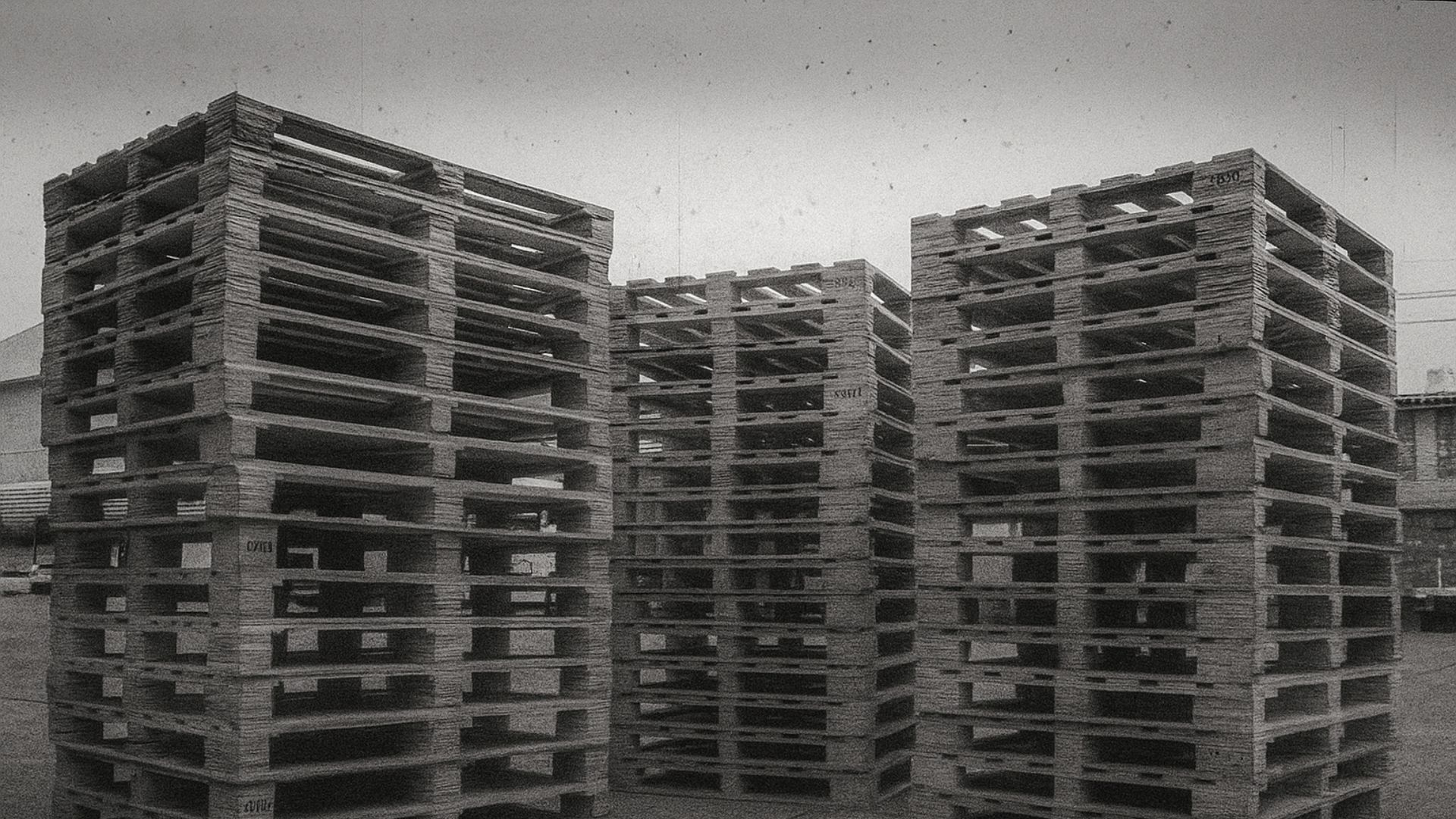
At the end of the Second World War, American military planners left millions of standardized pallets in Australia. They were bought for a steal by a little-known firm called Brambles. The company set about renting them to manufacturers, growers and retailers who, until then, relied on flimsy one-way pallets. Customers appreciated the higher quality and the convenience of Brambles collecting empties. Reuse proved cheaper than disposal, enabling Brambles to offer a better product at lower cost while turning a tidy profit. The model flourished. Brambles became a giant, running a pool of hundreds of millions of pallets. Many other pooling companies were founded in their wake. Today, billions of reusable containers, from grocery crates to roll cages to boxes for car engines, circle the globe. Prospects for further growth are strong: the fleet of reusable containers remains far smaller than the 100s of billions of cardboard boxes used annually. Environmental goals and regulations such as the EU’s Packaging and Packaging Waste Regulation (PPWR) provide further tailwinds. Yet reality often falls short. Reuse is cheaper only if containers are recovered quickly and redeployed many times. A lost container is a costly one. In open supply chains, losses and delays are routine. Why containers go astray Modern supply chains, whether retail, automotive or electronics, span sites owned by several firms, each with their own IT systems. These systems can track operations locally but are blind to what happens upstream or downstream. Once a container leaves one site, visibility can be lost. This is not only a problem for container management. Firms hunger for information on the whereabouts and condition of goods in transit. Separate company data silos make it very difficult to obtain. Too often, reusable containers are treated as an unwelcome compliance cost, the price of ESG pledges and regulatory diktats. What if, instead, they became a source of profit and competitive advantage? Containers as a digital platform Factories, farms, warehouses and stores may be run by different firms, but they share one thing: a common pool of reusable containers. Crates and pallets circulate through every corner of the supply chain. Once fitted with sensors, they cease to be passive carriers and become roving data collectors, capturing information across organizational boundaries. In doing so, they could dissolve silos and form the backbone of a new layer of digital infrastructure. The promise is clear: a supply chain made visible, predictable and efficient. To achieve it, trackers must meet daunting requirements: cheap enough to ride on low-value containers, smart enough to work everywhere without bespoke infrastructure, and durable enough to last the five to ten years of a container’s life. Meeting those demands would turn an old logistics workhorse into the foundation of tomorrow’s digital supply chain. The Sensize Tracking System Sensize has designed its tracking system around these constraints. It relies on two innovations: Parent/Child networking Cellular connectivity is ubiquitous and requires no fixed infrastructure. But cellular trackers are too costly to fit to every low-value container. Bluetooth trackers are far cheaper, but their short range (around 50 m) limits them to individual sites. Sensize combines the two. Most containers are fitted with low-cost Bluetooth Child sensors. A small fraction carries cellular Parent sensors. These parents collect data from nearby children and upload it via the mobile network. Because the parents travel with the fleet, coverage extends across the supply chain without the need for fixed infrastructure. Collaborative networking Supply chain sites hold many container types, such as crates, pallets and roll cages, often from multiple suppliers. If firms are using Sensize’s system, they can share the load –a parent tracker on a crate can collect data from a child tracker on a pallet, and vice versa. Data is uploaded, decrypted and delivered to the relevant supplier. Costs are effectively pooled, producing broader coverage than any one organization could manage alone. When assets become insights What began in the 1940s as a practical way to reuse military surplus has become one of the most important building blocks of modern logistics. Brambles worked out how to turn leftover wood into profit, while saving customers money. Digitized containers repeat the trick, although now the profit comes from data rather than wood. In an era of regulatory pressure and fragile supply chains, firms that grasp the opportunity and transform their boxes and pallets into roving sensors will not only cut losses but also gain visibility into flows of goods that competitors still struggle to find. What was once seen as a compliance burden may yet become the backbone of a profitable digital platform economy.
October 29, 2025
As we mark the end of summer and head into the colder months, it’s been a busy quarter here at Sensize. From reaching company milestones to globetrotting at industry events in the US, Germany and Spain, the Sensize team has been learning more about the spaces in which we operate and enabling us to provide a better asset tracking service than ever before. Find out all about it in our latest Quarterly Insights.
July 16, 2025
In this newsletter, we’re sharing our latest Sensize content and key company updates – plus, we have something exciting on the horizon!
May 6, 2025
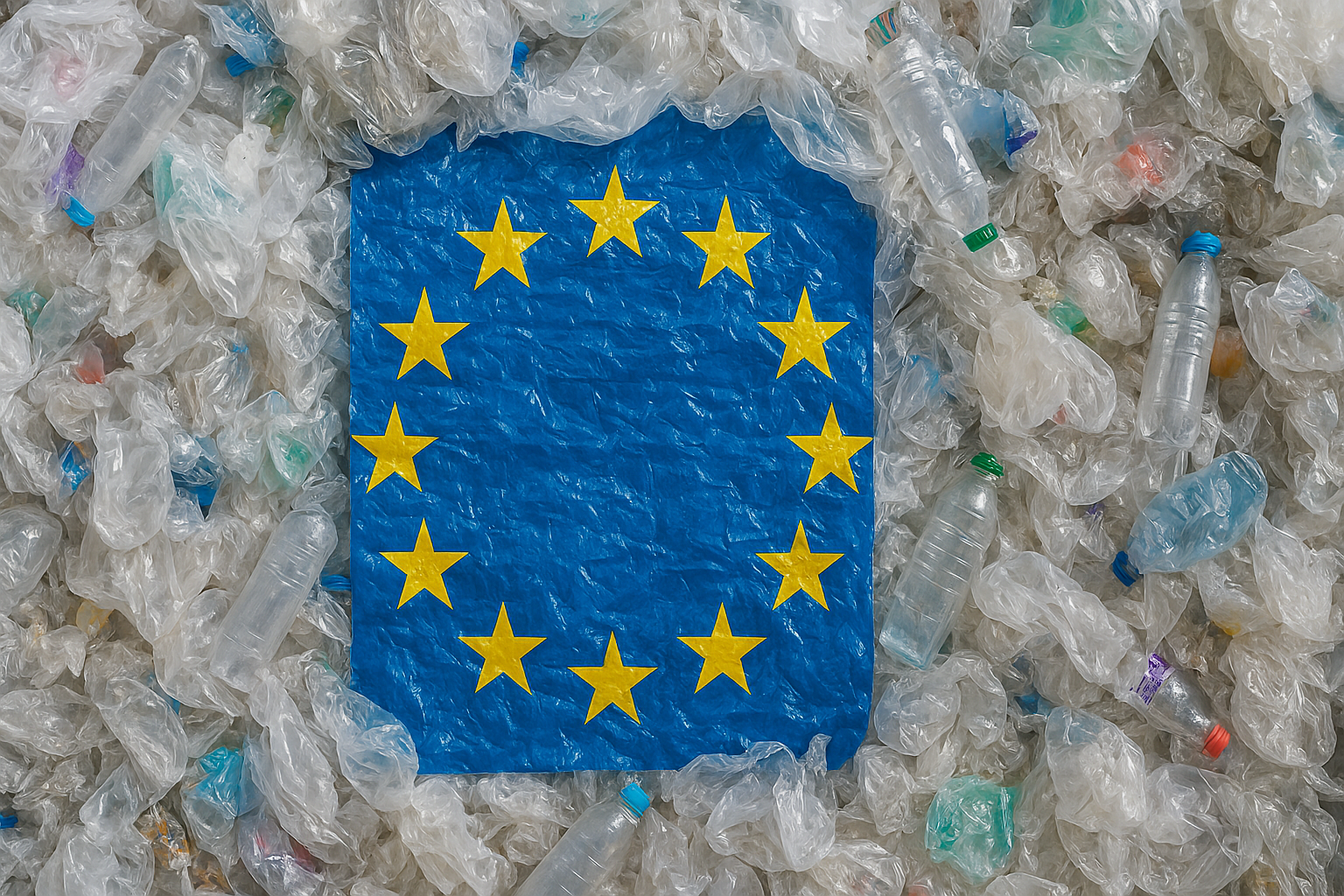
As the EU introduces new legislation to extend producer responsibility and slash packaging waste, we break down what this means for businesses.
April 30, 2025
It’s been a busy Q1 at Sensize and there have been some huge shakeups in the international supply chain market. So let’s take a look into the biggest news of the last three months and what has changed for asset tracking, sustainability and supply chain management. The impact of tariffs going forward Talk of an international trade war came to a fever pitch earlier this month when President Trump announced significant tariffs on countries all over the world. With the USA home to 30% of the world’s consumer spending, increasing the cost of imports had an immediate impact and, even though many tariffs have been temporarily paused, 25% tariffs remain on steel and aluminium and many imports from China will face tariffs as well. Tariffs showcase just how important having a thorough understanding of your supply chain can be. Asset tracking technology gives you more oversight into your supply chain allowing for easy adaptation should problems arise.
By Paul Lane March 27, 2025
Over the past decade, the automotive industry has been looking for improved end-to-end transparency across the supply chain. Take BMW AG for instance. In 2025, their Chairman of the Board of Management, Oliver Zipse, s aid in a statement: “We have learned in recent years how vulnerable and susceptible to disruption they can be. Take a guess: How many parts do you think our plants worldwide need to be supplied with every day? The answer is: 36 million. The right quantities have to be in the right place, at the right time, in the best quality.” These 36 million parts are placed in boxes which travel around the world, often getting lost, misused or insufficiently managed along the way. Plus, for this number of parts, there is a need for thousands or, sometimes, millions of containers. As the demand to take parts monitoring even more seriously increases, a comprehensive solution is required by businesses across all sectors. The market has become increasingly aware of the importance of identifying blind spots and understanding inefficiencies, with businesses using this knowledge to optimize their supply chains and improve their results. Whether it’s for suppliers monitoring their products or manufacturers tracking inbound equipment, comprehensive, near real-time visibility across their operations is invaluable in getting to the bottom of these issues and finding a solution. Industry data found that 45% of automotive manufacturers expressed concerns about the lack of transparency in inbound supply chains. Active GPS tracking of the reusable packaging used within the industry allows automotive businesses to receive quick and precise data on the location, condition and status of automotive equipment and parts, allowing for loss reduction, improved inventory management and complete regulatory compliance. Keep reading for a detailed look at the benefits of asset tracking for automotive assets.
February 20, 2025
If you’re interested in implementing asset tracking in your supply chain, GPS tracking could be the solution. Here’s how it works.
January 22, 2025
Want to find out how we ensure quality with our trackers? Our latest article showcases what we do to make sure you get the best for your supply chain.
January 20, 2025
We're excited to announce the launch of our quarterly newsletter – an opportunity to explore the world of asset tracking, sustainability, and supply chain management together.
Show More