
Sputnik 1 caused a sensation when it was launched by the Soviet Union in 1957.
Coming only two years after Moscow’s first thermonuclear test, the first man-made satellite seemed to confirm that the West was falling behind in the Cold War.
American physicists were told to learn as much as possible.
By studying its steady radio transmissions, they confirmed that Sputnik was in a stable orbit that circled Earth every 12 hours.
They could calculate exactly when it would rise over the horizon at any location. With the maths reversed, they realised that the same method could be used to locate the observer.
Navigation using celestial bodies was nothing new. Sailors had been doing it for centuries. But a system that used artificial satellites offered something faster and far more precise. The obstacle was cost.
One satellite was useless. You needed at least four in view at once. That meant a constellation of 25 or more at a time when only one existed.
So the question was simple… what purpose could justify the expense?
The strategic rationale
The answer came from the logic of mutually-assured destruction.
Nuclear deterrence relied on the ability to launch a counterattack after a first strike.
Missiles based on land or in airfields were vulnerable. If they could be eliminated in a surprise strike, deterrence collapsed.
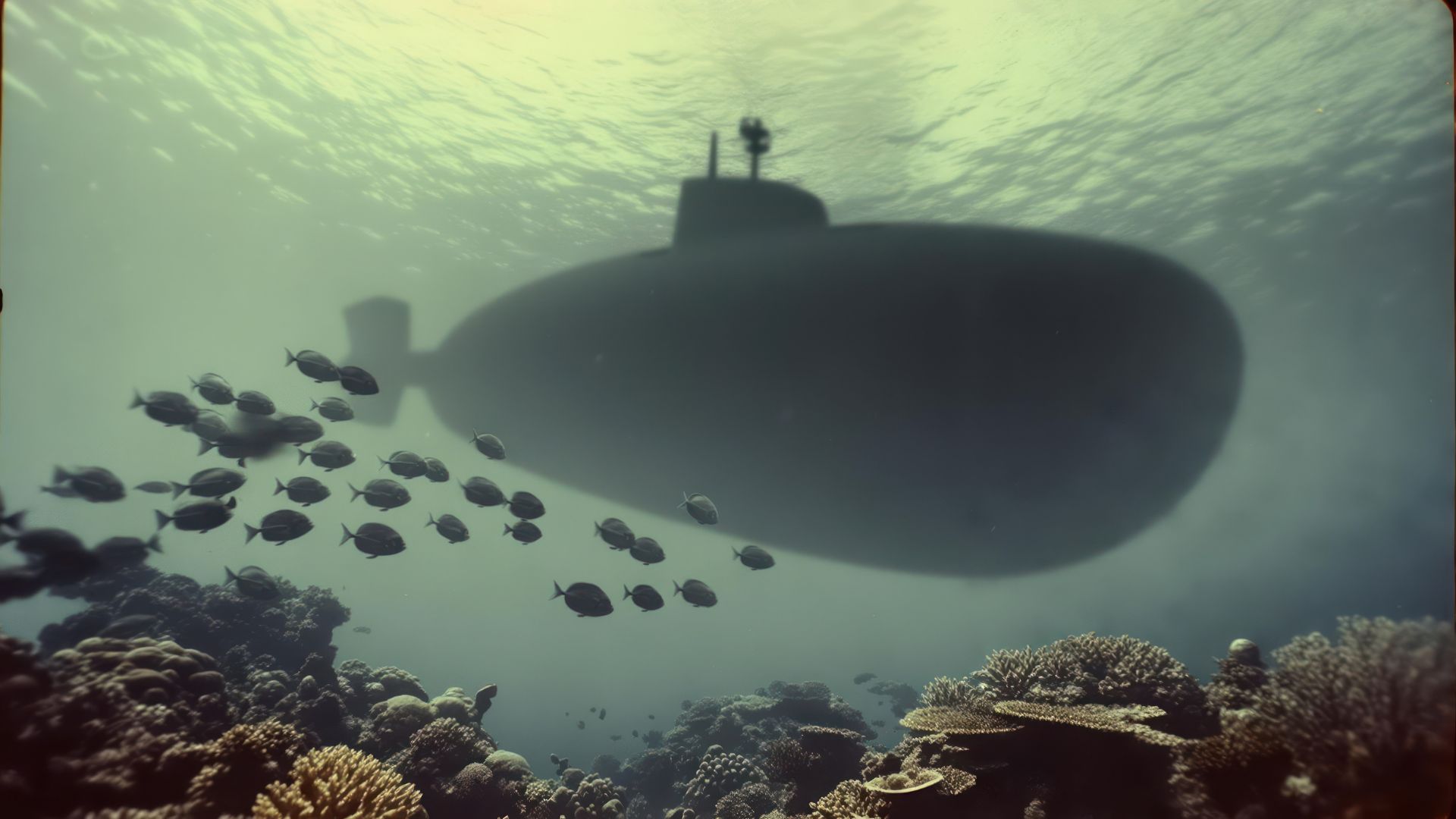
Submarine-launched missiles were the answer.
Submarines could hide underwater, survive an attack and strike back.
But there was a problem. Missiles fired from a moving submarine were extremely inaccurate.
To plot a missile path, you need to know the precise launch point. On land that was easy. At sea it was a major challenge, but Sputnik offered a way out.
This was the real reason GPS was created: to make submarine-launched missiles accurate enough to reduce the risk of nuclear war.
The design assumptions
Today there are many related systems such as Galileo in Europe, Glonass in Russia, BeiDou in China and QZSS in Japan.
Together they form the global navigation satellite system. The chips are smaller and far cheaper. But the physics behind the system has not changed.
GPS was designed for submarines and the assumptions were clear.
- An antenna would always have an unobstructed view of the sky
- Power would be unlimited thanks to the nuclear reactor on board
- Cost would not be a barrier because the wider program was worth billions
This is why GPS works well at sea or in the air or in vehicles with plenty of battery power.
Satnav in a car functions smoothly because the design principles behind GPS are similar to the needs of a submarine commander.
It performs far less well when conditions shift away from those original assumptions.
- Indoors: GPS cannot operate without a view of the sky
- Obstructed skies: You need four satellites to get a reliable position and they may not all be visible
- Battery-powered devices: A GPS receiver must search for faint signals from satellites more than 20,000 kilometres away. Scanning across many options uses a lot of power. This is fine for a submarine or a car but a major issue for a small coin cell powered tracker
- Ultra-low-cost devices: Early GPS sets cost tens of thousands of dollars. Even with falling prices, GPS is still relatively expensive when used in the lowest cost tracking devices

Implications for container tracking
GPS is still the gold standard for global positioning. It is accurate and it works across the entire planet. But tracking reusable containers in the retail supply chain is nothing like navigating a submarine in open water.
Most containers spend time indoors in back rooms in warehouses or in packed yards. The environments are full of metal structures that block sky views. The assumptions behind GPS simply do not apply.
Efforts from chip innovators have reduced power use and hardware cost.
This makes GPS usable in more situations. But it tends to be most effective in specific scenarios:
- When used sparingly in Sensize’s Parent/Child system where only a small percentage of containers carry GPS devices and share their position with the rest
- For higher-value assets that travel to remote or rugged locations such as in oil gas or mining
- In regions like the American West where logistics yards are large open spaces with clear views of the sky
GPS alone is not a complete solution for container tracking but it remains an important part of the mix.
Extra context for modern asset tracking
When businesses consider asset tracking, they require visibility across both indoor and outdoor spaces, long battery life and low-cost sensors that can scale across thousands of assets.
GPS can help, but it cannot do all of this by itself.
This is why many supply chains now combine GPS with technologies such as Bluetooth low energy.
Bluetooth performs well indoors uses very little power and can be built into very low-cost sensors. GPS provides the long-range outdoor accuracy. The combination gives complete visibility without relying on GPS in places where it struggles.
The Parent/Child model is a good example.
A small number of assets carry GPS units while the majority use Bluetooth sensors. These sensors send data to the GPS parents whenever they come near them.
This lets the system understand where everything is even though only a fraction of items carry GPS.
The takeaway
GPS has a vital role in asset tracking and always will. But it was created for submarines, not supply chains.
When used alone it cannot meet the needs of container fleets that move through stores warehouses and busy yards.
When paired with other technologies it becomes part of a complete tracking system that is both accurate and practical.
A hybrid approach provides the reliability of GPS where it works best and the efficiency of Bluetooth where GPS falls short.
For most supply chains, this mix gives the most robust and cost-effective visibility across every movement of every asset.
Discover more about how a blended asset tracking system can transform your supply chain by getting in touch with our team.
